What Staffing Agencies Charge for Warehouse Workers
Staffing agencies charge for warehouse workers by the hour: you pay a bill rate equal to the worker's pay rate plus the agency's markup, for every hour worked. What you pay depends mostly on the pay rate needed to fill your shift, the state you are in, the kind of work, and how many workers and hours you commit to.
There is no national price list, and any agency quote should show you the pay rate and the bill rate separately. This guide covers what sits inside a warehouse bill rate, what pushes it up or down, how to compare a temp with a direct hire using your own numbers, and when hiring direct comes out ahead.
By Optihire Staffing Editorial Team
6 min read
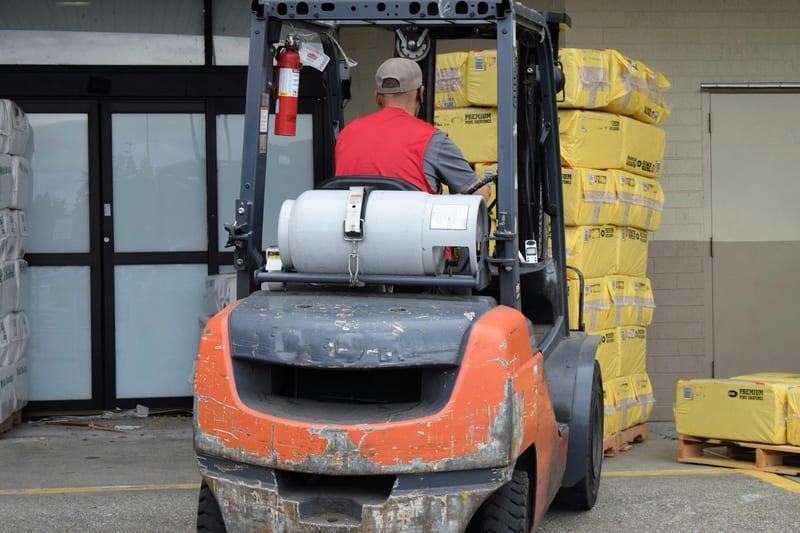
Temp bill rates vs a direct-hire fee
With temp staffing, the agency employs the worker and invoices you hourly. The bill rate is the pay rate × (1 + markup). The markup covers the employer's payroll taxes, unemployment insurance and workers' compensation, then the agency's recruiting, overhead and profit. Our guide to staffing agency markup rates works through those costs line by line with the official tax rates.
A direct-hire recruiter works differently. The worker joins your payroll on day one, and the recruiter is paid a one-time fee when the hire is made. After that, your cost is wages plus your own payroll costs. The comparison comes down to how long you need the person: hourly markups suit short needs, and a one-time fee suits a seat you will keep filled.
Start with the pay rate
The pay rate is the biggest number in the bill rate, and it is set by the local labor market more than by the agency. Nationally, the Bureau of Labor Statistics reports a median wage of $18.38 an hour for hand laborers and material movers in May 2025. Median annual pay was $40,240 for laborers and freight, stock and material movers, $37,330 for stockers and order fillers, and $36,280 for hand packers and packagers.
Your local rate may be well above or below those medians. Check what nearby distribution centers advertise for the same shift. A quote with a low bill rate because the agency plans to pay below the local market can turn into unfilled shifts and a steady stream of replacements.
What drives a warehouse staffing rate
Shift and overtime
Overnight, weekend and freezer shifts usually need a higher pay rate or a shift differential to fill, and the markup applies to that higher rate. Peak season adds overtime. Under federal law, nonexempt workers must be paid at least time and a half for hours over 40 in a workweek, so ask how the agency bills overtime hours before peak starts.
Location
Payroll costs differ by state. State unemployment tax rates and wage bases are set by each state. Workers' compensation varies widely: Oregon's 2024 study of premium rates across all states found index rates from $0.50 per $100 of payroll in North Dakota to $2.52 in Hawaii. An agency in a high-cost state has more to cover before it earns anything.
The work itself
Workers' compensation is priced by job classification, and warehouse work carries more risk than office work. The BLS recorded 4.8 injury and illness cases per 100 full-time workers in warehousing and storage in 2024. Roles that involve powered trucks also need site-specific training and evaluation under OSHA's forklift standard, and that applies to temps too. OSHA says staffing agencies and host employers are jointly responsible for temp workers' safety and training, so ask who provides the forklift training and who keeps the record.
Volume, length and commitment
A steady order for 20 workers on a fixed schedule for six months is cheaper to fill than three workers for a week with shifts that change daily. Agencies may price in minimum hours, minimum assignment lengths or charges for shifts cancelled at short notice. Read those terms before you compare bill rates.
Full-time vs temp cost comparison with your own inputs
To compare honestly, put the same worker on both payrolls for the same number of weeks. Use your real pay rate, hours and quotes.
- Temp cost: pay rate × (1 + markup) × hours per week × weeks needed.
- Direct cost: pay rate × (1 + your payroll cost rate) × hours per week × weeks needed, plus the one-time recruiting fee or your own cost per hire.
- Add the extras on each side: conversion fees and minimum hours on the temp side, and onboarding time, safety gear and any guarantee terms on the direct side.
- Find the week where the two totals cross. Before it, the temp is cheaper. After it, hiring direct is.
Our temp markup vs direct-hire fee calculator does this for you and shows the break-even week. If people leave often, run your numbers through the employee turnover cost calculator too, because each replacement restarts the cost on both sides.
When direct hire wins
- The role is year-round. Markup on every hour, every week, adds up past a one-time fee for most long assignments.
- You train people on your own systems, locations or trucks. Every temp who rotates out takes that training with them.
- You keep converting temps anyway. If most of your good temps end up on your payroll, you are paying the markup and a conversion fee to do it.
- You want leads and trainers. Experienced workers who could run a shift are often employed already and want a permanent job.
Temp staffing still makes sense for a seasonal peak, a short project or a new contract whose volume you cannot predict yet. Our seasonal hiring plan covers how to size those needs. Many warehouses use both: temps for the peak, direct hires for the core crew.
Questions to ask a warehouse staffing agency
- What pay rate will you offer for this shift, and how did you set it?
- What is the bill rate for regular hours, overtime and holidays?
- Who provides forklift training and evaluation, safety gear and the site orientation?
- What happens when a worker does not show up, and how quickly do you send a replacement?
- What is the conversion fee if we hire a worker, and when does it end?
- Are there minimum hours, minimum assignment lengths or cancellation charges?
How Optihire Staffing can help with permanent warehouse hires
Optihire Staffing recruits permanent warehouse workers, forklift operators and leads for employers across the United States. We do not bill hourly. We work on contingency, so you pay a recruitment fee only when a successful candidate is hired, under terms agreed in writing before any work starts.
If your temp spend on core roles keeps growing, submit your hiring requirements with the shifts, pay and headcount, or read how we work with employers.
Hiring for logistics & warehousing roles?
Tell us about the role and we will come back with screened candidates. With contingency recruitment, you pay only when a successful candidate is hired, subject to agreed terms.