Interview Questions to Ask a Forklift Operator
Good interview questions to ask a forklift operator find out which trucks the candidate has actually run, how they check a truck before a shift, and what they do when speed and safety pull in different directions. Ask for specifics (truck type, load, rack height, last evaluation date) and listen for answers that describe steps in order.
The 16 questions below are grouped the way a safety lead would think about the job. Each has notes on what a strong answer sounds like. The interview is only half the picture, so the last section explains how to pair it with a hands-on evaluation that fits OSHA's training rules.
By Optihire Staffing Editorial Team
8 min read
Experience and truck types
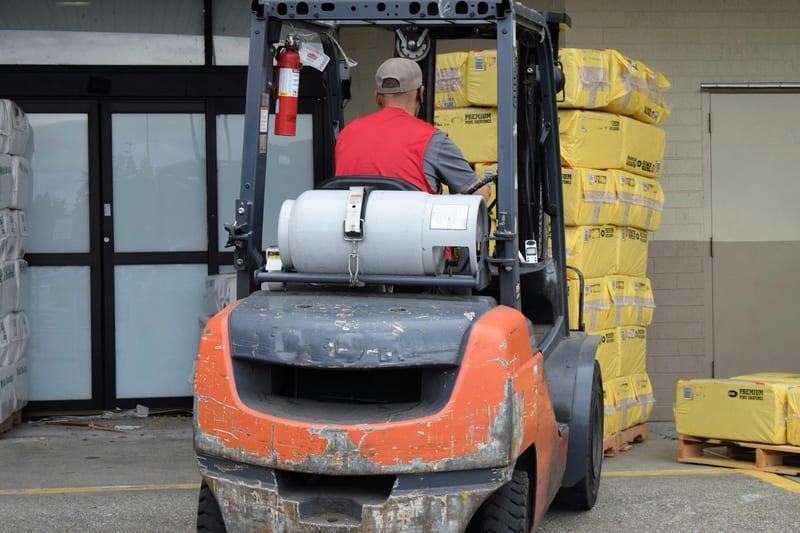
"Forklift experience" can mean years on a stand-up reach truck in narrow aisles or a few weeks on a pallet jack. OSHA's forklift eTool lists seven classes of powered industrial trucks, from electric rider trucks and narrow-aisle trucks to internal combustion trucks on cushion or pneumatic tires and rough terrain forklifts. Start by finding out which of those the candidate has really operated.
1. Which trucks have you operated, and for how long on each?
A strong answer names the truck types (sit-down counterbalance, stand-up reach, order picker, pallet jack), the power source (electric, propane, diesel) and roughly how many months or years on each. Vague answers like "all kinds of forklifts" need a follow-up: ask them to describe the controls on the last truck they drove.
2. What were you moving, and how high were you stacking?
Listen for load types (palletized freight, drums, rolls, building materials) and rack heights. Putting away pallets at the top of high racking is a different skill from moving pallets across a dock. Match the answer to the work at your site.
3. When were you last trained and evaluated on a forklift, and who did it?
Under 29 CFR 1910.178(l), each employer must certify that its operators were trained and evaluated, and the record includes the operator's name, the training and evaluation dates, and who performed them. Operators must be evaluated at least once every three years. A candidate who knows when and where they were last evaluated has probably been through a real program. "I got my card online" deserves a follow-up, because a written course alone does not cover the practical part of the requirement.
4. On a typical shift, how many hours were you actually on the truck?
Some "forklift operators" spend most of the day picking by hand and drive for an hour. Others are on the truck all shift. The answer tells you how much practice the candidate really has.
Safety and pre-shift inspection
OSHA requires trucks to be examined before being placed in service, at least daily, and after each shift where trucks run around the clock. A truck with a defect that affects safety must not be used until it is fixed. These questions show whether a candidate does the check out of habit.
5. Walk me through your pre-shift check.
A strong candidate describes two passes, in the same order OSHA's pre-operation guidance uses. With the key off: fluid levels, leaks, tires, forks, mast chains, guards, the data plate and the seat belt. With the truck running: brakes, steering, horn, lights, lift and tilt, and the backup alarm if fitted. They should also say what they do with a problem: tag the truck out and report it.
6. You find a hydraulic leak during your check, and your supervisor says a trailer has to go out in ten minutes. What do you do?
The right answer is that the truck stays parked and gets reported, and the operator asks for another truck. Listen for how they would say it to the supervisor. You want someone who holds the line politely.
7. How do you handle people on foot in your aisles?
Good answers mention slowing down and sounding the horn at blind corners and cross aisles (both are in the OSHA standard), making eye contact before moving, and stopping when someone walks into the path. Candidates who talk about "people needing to watch out" are telling you who they think is responsible.
8. What do you do before you step off the truck?
Listen for: forks fully lowered, controls in neutral, power off and brake set, with wheels blocked on a slope. That is what OSHA requires when a truck is left unattended, and experienced operators do it without thinking.
Load handling and attachments
9. How do you know a load is too heavy for your truck?
A strong answer mentions the data plate, the load center and how lift height changes what the truck can carry safely. Operators who have used attachments should add that an attachment changes capacity. If the answer is "you can feel it," probe further.
10. Which attachments have you used?
Side shifters are common. Clamps, rotators, fork positioners and extensions are less so. If your site uses one, ask the candidate to describe a job they did with it.
11. Talk me through taking a pallet down from the top level of a rack.
Listen for an order of steps: approach square and slowly, stop before the rack, raise the forks to the right height, check the forks are under the pallet, lift slightly, back out, lower before traveling. Someone who describes traveling with the load raised is a concern.
12. You are loading a trailer at a dock. What do you check before you drive in?
Experienced operators mention that the trailer is secured with wheel chocks or a dock lock, that the dock plate is in place, and that the trailer floor looks sound. If your site loads trailers all day, this question matters more than any other.
Behavioral questions
13. Tell me about a near miss you saw or were part of. What happened next?
Honest candidates have a story. What you want to hear is that it was reported and something changed. OSHA requires refresher training when an operator has an accident or a near miss, so a candidate who mentions that kind of follow-up has worked somewhere with a real program.
14. Tell me about a time you were pushed to go faster than felt safe.
This finds out how the candidate handles pressure from rates and deadlines. Good answers describe speaking up or slowing down and explaining why. Bragging about record speed is a warning sign.
15. How was accuracy measured on your last job?
Many operators also scan, put away and pick. Listen for mispicks, location errors and inventory counts, and ask how they kept their errors down.
16. How would your last supervisor describe your attendance?
A skilled operator who misses shifts still leaves a dock short. Ask directly and kindly, then confirm with a reference check.
Red flags in a forklift operator interview
- Cannot name the truck types they have run, or describes controls that do not match the truck they claim.
- Treats a wallet card as a license that covers every truck and every site.
- Describes skipping the pre-shift check when busy, or has never tagged out a truck.
- Talks about speed records, horseplay on trucks or giving coworkers rides. OSHA prohibits stunt driving and horseplay, and unauthorized riders.
- Blames pedestrians or coworkers for every incident they describe.
Check age before anyone goes near a truck. Federal child labor rules (Hazardous Occupations Order No. 7) bar workers under 18 from operating most power-driven hoisting equipment, including forklifts, in nonagricultural jobs, according to the Department of Labor.
Keep physical questions tied to the job. The EEOC's guidance allows you to describe physical requirements, such as climbing on and off a truck many times a shift, and ask whether the candidate can do them, but not to ask about disabilities or medical conditions before a job offer.
Pair the interview with a practical evaluation
An interview tells you what a candidate knows. Watching them inspect a truck and move a load tells you what they do. OSHA requires training and evaluation to be done by people with the knowledge, training and experience to judge operator competence, and a trainee may only operate under direct supervision during training. Before anyone drives at your site, talk to your safety lead about how a hands-on check fits into your training program.
Powered industrial trucks were seventh on OSHA's preliminary list of most frequently cited standards for fiscal year 2026, so the process deserves the same care as the interview. Our forklift practical test checklist lists the inspection, driving and load-handling items to score. For the full hiring process, from job post to first week, see how to hire a forklift operator.
How Optihire Staffing can help you hire forklift operators
Optihire Staffing recruits forklift operators and other logistics and warehousing staff for employers across the United States. Our recruiters ask candidates about the trucks they have run, recent experience and safety habits before you see a resume, and we tell candidates to expect your own training and evaluation during onboarding.
With contingency recruitment, you pay a recruitment fee only when a successful candidate is hired, under terms agreed in writing before any work starts. Submit your hiring requirements with the trucks, shifts and pay for the role.
Hiring for logistics & warehousing roles?
Tell us about the role and we will come back with screened candidates. With contingency recruitment, you pay only when a successful candidate is hired, subject to agreed terms.