How to Hire a Forklift Operator: From Screening to Offer
To hire a forklift operator, start by naming the exact trucks, loads and shifts, then phone screen for recent experience on those trucks, interview with scenario questions, and finish with your own training and evaluation before the new hire operates alone. Under OSHA's rules, a forklift card from a previous job is useful evidence, but the employer certifies its own operators.
The steps below cover each stage, with a phone screen script you can copy and a plan for the first week. If you are filling several warehouse roles at once, our guide on how to hire warehouse workers fast covers the wider process.
By Optihire Staffing Editorial Team
6 min read
Define the truck types and shifts
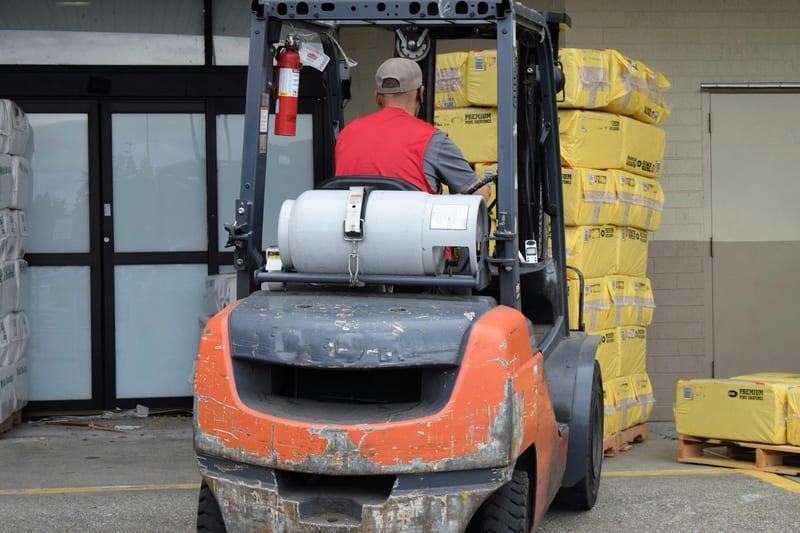
"Forklift operator" covers very different jobs. OSHA's forklift eTool groups powered industrial trucks into seven classes, from electric rider and narrow-aisle trucks to internal combustion trucks and rough terrain forklifts. Someone who has spent five years on a sit-down propane truck in a yard may still need real practice on a stand-up reach truck in 10-foot aisles.
Before you post, write down:
- Each truck the person will run, with the power source and any attachments such as clamps or side shifters.
- What they will move and the highest rack level they will reach.
- How much of the shift is driving and how much is picking, scanning or loading by hand.
- Whether they will load and unload trailers at a dock.
- The exact shift times, weekend pattern and how often overtime comes up.
- The pay rate, and any shift differential.
For a national reference point on pay, the Bureau of Labor Statistics reports a median annual wage of $46,420 for industrial truck and tractor operators in May 2025 (BLS Occupational Outlook Handbook). Local rates vary widely, so compare against current postings near your site before you set a number. Put the rate, shift and trucks in the first lines of the post, because those are the details operators compare.
What "certified" means for an employer
Candidates often say they are "certified," and many carry a card. Under 29 CFR 1910.178(l), the employer must make sure each operator is competent, and must certify that each operator has been trained and evaluated. That certification records the operator's name, the training and evaluation dates, and who performed them. OSHA's training page puts it plainly: operators must be trained and certified by their organizations.
- Training combines formal instruction, practical training and an evaluation of the operator's performance in your workplace.
- An operator does not have to repeat a training topic covered before, if that training fits your truck and conditions and the operator has been evaluated as competent.
- Each operator must be evaluated at least once every three years, and again after events such as a near miss or a move to a different type of truck.
- Federal child labor rules bar workers under 18 from operating most forklifts in nonagricultural jobs, according to the Department of Labor.
In hiring terms, treat a card as a sign the candidate has been through a program before, and ask when and where. It can shorten your training, and you still run your own evaluation.
Where forklift operators look for work
Operators who already have a job may not be checking job boards, so use more than one channel and lead with the details operators compare.
- Job boards and your own careers page, with the truck types and pay in the title or first line.
- Referrals from your current operators, who know who runs a truck well.
- Former operators who left on good terms, especially before a busy season.
- Local technical schools and workforce programs that run forklift training.
- A recruiter who already talks to operators in your area.
Whatever the channel, respond fast. Hourly candidates often apply to several jobs at once and take the first solid offer with a clear start date.
Forklift operator phone screen script
Five minutes on the phone filters out most mismatches before anyone takes time off for an interview. Ask the same questions in the same order for everyone.
- "The job is second shift, 3 p.m. to 11:30 p.m., Monday to Friday, with some Saturdays in peak. Does that work for you?"
- "Which trucks have you driven in the last year, and for how long on each?"
- "What was the highest rack level you put away to?"
- "Have you loaded or unloaded trailers at a dock?"
- "When were you last trained and evaluated on a forklift, and where?"
- "The pay is $X an hour plus a differential for second shift. Is that in your range?"
- "How would you get here, and how long does it take?"
- "If we offered you the job, when could you start?"
Change the shift, trucks and pay to match your role. If the answers fit, book the interview before you hang up. For the interview itself, use our interview questions to ask a forklift operator, which cover pre-shift checks, load handling, pedestrians and red flags.
Run a practical evaluation
What a candidate says in an interview and what they do on a truck can differ. OSHA requires operator evaluations to be carried out by people with the knowledge, training and experience to judge competence, and trainees may only operate under direct supervision. Work out with your safety lead where a hands-on check sits in your process. One option is a short supervised driving check during the final interview, run within your training program. Another is to make the offer conditional on passing your evaluation.
Our forklift practical test checklist lists the pre-use inspection, driving and load-handling items to score, along with the records OSHA expects.
Keep physical requirements tied to the job. The EEOC's guidance says employers can describe a job's physical demands and ask whether a candidate can meet them, and that a test of simulated job tasks is not a medical exam. Questions about disabilities or medical conditions have to wait until after a conditional offer.
Make the offer and plan the first week
Put the offer in writing with the pay, shift, start date, where to report and what to wear, such as safety-toe boots. Call the new hire a day or two before they start to confirm. A quick call catches people who have quietly accepted another job.
- Day one: paperwork, a site safety orientation, a walk through the traffic routes and pedestrian areas, and an introduction to the trainer.
- First days: the training topics your program covers for each truck and the hazards in your building, then the practical evaluation.
- Until the evaluation is complete, the new operator drives only under direct supervision.
- End of week one: a short check-in about the shift, the work and anything that surprised them.
The Bureau of Labor Statistics notes that forklifts may take only a few days to learn, so most of the first week goes on your building, your loads and your procedures. The first month matters too: confirm the schedule is what you promised and ask new operators what has surprised them.
How Optihire Staffing can help you hire forklift operators
Optihire Staffing recruits forklift operators for warehouses, distribution centers and plants across the United States. One recruiter learns your trucks, shifts, pay and what a good operator looks like at your site, then phone screens candidates on recent experience and safety habits. You receive a shortlist with a short note on why each person fits. We do not provide training or certification, and we tell candidates to expect your own evaluation.
With contingency recruitment, you pay a recruitment fee only when a successful candidate is hired, under terms agreed in writing before any work starts. Submit your hiring requirements, or see all our logistics and warehousing roles.
Hiring for logistics & warehousing roles?
Tell us about the role and we will come back with screened candidates. With contingency recruitment, you pay only when a successful candidate is hired, subject to agreed terms.